 Skip-the-line available
 Best Time to Visit Sintra National Palace
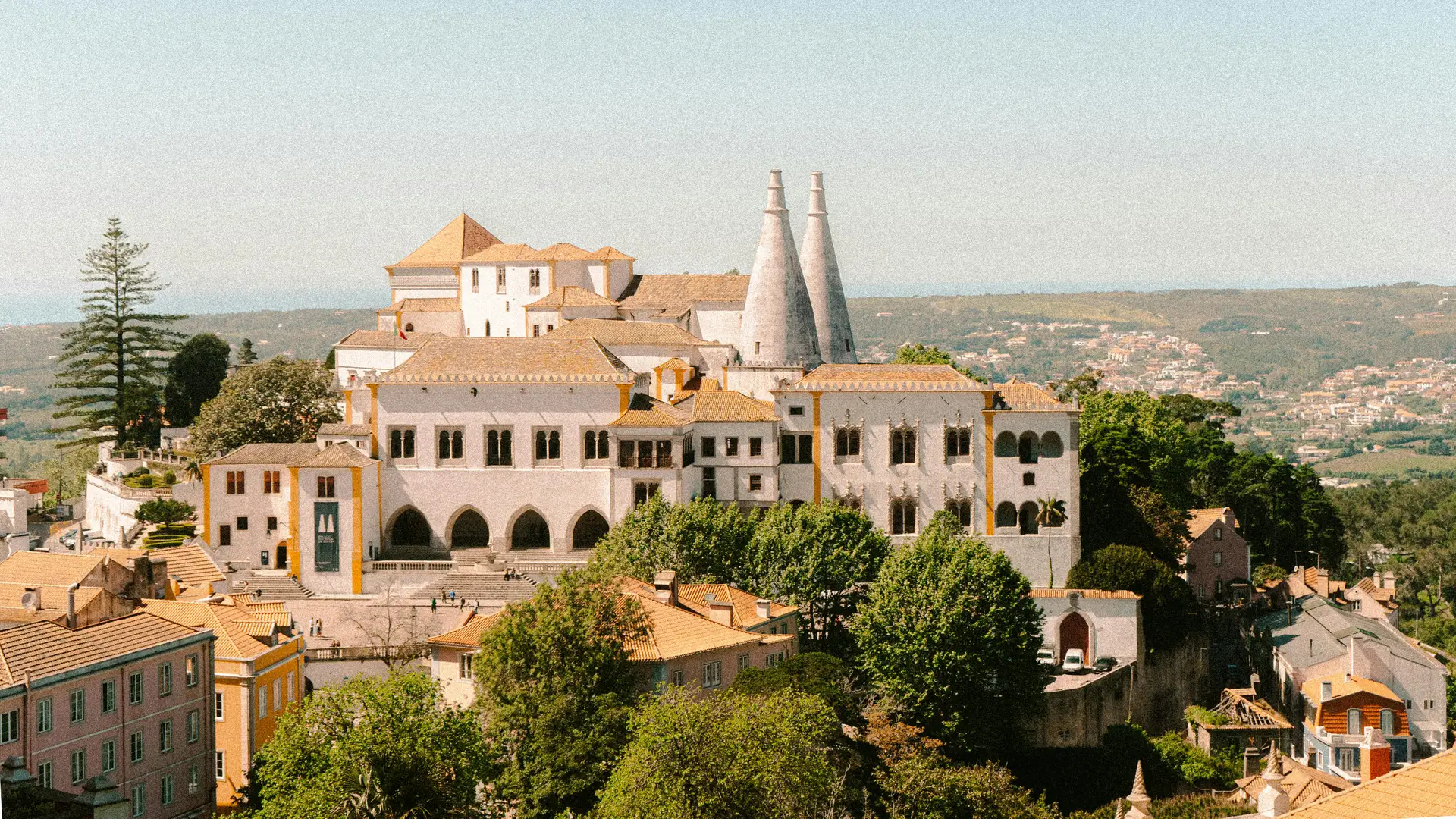
Sintra is one of the most photographed small towns in Europe, and its historic centre — where Palácio Nacional de Sintra sits in flat, walkable ground beneath the twin medieval chimneys — funnels every visitor through the same narrow cobbled streets between roughly 11:00 and 16:00 each day. The palace itself opens at 09:30 and accepts last entry at 18:00, closing its doors at 19:00, which gives a generous 8.5-hour daily window. The art of timing your visit well is less about the palace's own capacity and far more about the bottleneck of Sintra village around it. This concierge guide walks you through the quietest hours, the best days of the week, the seasonal patterns Portuguese long weekends create, and how the National Palace fits into a smart full-day Sintra itinerary that also takes in Pena Palace and the Moorish Castle without exhausting you or wasting hours in shuttle queues.
Opening hours and the quietest entry windows
Palácio Nacional de Sintra opens daily at 09:30 and admits its last visitor at 18:00, with all rooms cleared by the 19:00 closing time. Those eight and a half hours are evenly busy in high season but unevenly busy the rest of the year, and the rhythm is shaped less by the palace itself and far more by Sintra's historic centre, which fills up sharply from late morning. The palace operator, Parques de Sintra-Monte da Lua (PSML), recommends pre-booked tickets for all sites in the Sintra Cultural Landscape, and the National Palace is the only one of the major monuments that sits inside the village itself rather than up on the wooded ridge. That means you do not need shuttle buses or hill walking to reach it — you walk straight in from the cobbled main square — but it also means the palace shares its entry corridor with every day-tripper milling through Sintra's restaurants and pastry shops.
Two windows are consistently quieter inside the palace and in the streets immediately around it. The first is the opening half-hour from 09:30 to 10:00, before the Lisbon trains have fully delivered their day-trip wave; arriving for the very first entry slot is the single most effective thing a visitor can do, especially in summer. The second is the late-afternoon window from roughly 16:30 onward, when the coach groups have rotated back toward Cascais and Lisbon and the village exhales. The Swan Room, the Magpie Room and the Coats of Arms Room — three of the most photographed interiors in Portugal — are markedly easier to enjoy in those bracketing hours. Midday, by contrast, brings clustered guided groups through the same enfilade of rooms, with knock-on waits at the narrowest doorways.
Weekdays versus weekends in the historic centre
Monday to Friday mornings are the calmest combination for the National Palace, because Lisbon weekend leisure traffic and tour-coach itineraries both peak on Saturday and Sunday. Sintra's historic centre — a UNESCO-inscribed Cultural Landscape — has very limited vehicular access, and on weekends the bottleneck becomes the village streets themselves rather than the palace ticket gate. A Tuesday or Wednesday at 09:30 is the gold standard for relaxed indoor visiting. If your trip dates only allow a weekend, choose Sunday over Saturday where possible and aim for either the first entry or the last two hours of the day. Avoid Saturdays in May, June, September and October specifically, when domestic Portuguese visitors join the international stream.
The practical effect of weekend congestion is that even a pre-booked ticket cannot rescue you from the slow walking pace through the cobbled lanes between the train station, the main square and the palace gate. Tuk-tuks queue, terrace cafés overflow, and the small pedestrian streets that funnel traffic past the palace's twin chimneys move at the pace of the slowest tour group. On weekdays this same approach takes three to five minutes; on a peak Saturday it can stretch to twenty. Concierge advice is therefore simple: if you have any midweek flexibility, use it. If you do not, your concierge will pre-book the earliest available entry slot of the day, deliver tickets to your inbox the evening before, and brief you on the exact walking line from Sintra station that bypasses the busiest café terraces.
Seasons, weather and Portuguese long weekends
Sintra's microclimate is famously cooler and mistier than central Lisbon thanks to the Atlantic-facing Serra de Sintra, which means summer in the palace is comfortable even on a 35°C Lisbon day, and shoulder-season visits in April, May, October and early November are extremely pleasant. Winter (December through February) is the lowest-volume period and a genuine luxury for serious history visitors, with the trade-off of occasional rain. The mist that sometimes rolls in off the Atlantic is itself part of the Sintra experience and gives the painted ceilings and Hispano-Moorish tile galleries a soft, diffused light that flatters photography rather than spoiling it.
The dates to deliberately avoid are Portuguese long weekends and national feast days: Easter weekend (movable), 25 April (Liberty Day), 1 May (Labour Day), 10 June (Portugal Day), 15 August (Assumption), and the long weekend around 5 October (Republic Day). On those days the historic centre is at its absolute maximum, and even a pre-booked palace ticket will involve slow walking through the village. Local school holidays in late July and August also tip the village toward family-traffic peaks. If your dates overlap a Portuguese holiday and cannot be moved, aim for the very first entry of the day or the final two hours before closing; otherwise consider deferring Sintra by 24 to 48 hours and using the holiday day in central Lisbon, which is noticeably quieter when the city empties toward the coast.
Combining the National Palace with Pena and the Moorish Castle
Most visitors quite reasonably want to see more than one Sintra monument, and the smartest sequencing for a single day is: National Palace first thing at 09:30, then climb the hill (by 434 bus, tuk-tuk or rideshare) to Pena Palace and the Moorish Castle for the middle of the day, then descend back into the village for a late afternoon pastry and the train home. The National Palace handles a 60-to-90-minute visit very well, leaving the bulk of the day for the hilltop sites, which need more walking time and have higher elevation gain. Combined tickets covering multiple PSML sites are available and typically work out cheaper than buying singles — your concierge will assemble the right combination for your party size and pace.
This sequence respects the historical chronology (medieval to 19th-century Romantic) and the physical effort gradient (flat first, hill second). It also rides the day's crowd curve rather than fighting it: you reach the village before the day-trip wave, you reach the hilltop just as it crests, and you descend back to the historic centre as the coach groups depart. If you have stamina for a third site, add Quinta da Regaleira between Pena and the late-afternoon train — it sits a short walk from the village and absorbs a flexible 90-minute visit. If you have only half a day rather than a full day, the National Palace alone is the strongest single choice because it requires no shuttle, no hill climb, and no transfer logistics.
Frequently asked
What time does Palácio Nacional de Sintra open?
The palace opens daily at 09:30, with last entry at 18:00 and closing at 19:00, giving an 8.5-hour visiting window.
When is the National Palace least crowded?
The opening half-hour (09:30–10:00) and the late-afternoon window from about 16:30 onward are consistently the quietest times inside the palace and in the surrounding streets.
Is it open every day of the year?
The palace operates daily but closes on a small number of dates each year (typically 1 January, 25 December, and occasionally for state events). Your concierge will confirm closures for your specific travel dates.
Are weekends busier than weekdays?
Yes, noticeably. The bottleneck is Sintra's historic centre rather than the palace itself, and Lisbon weekend leisure traffic plus tour coaches make Saturday and Sunday the busiest days.
Which Portuguese holidays should I avoid?
Avoid Easter weekend, 25 April, 1 May, 10 June, 15 August, and the long weekend around 5 October. The village is at its maximum on those dates.
Is winter a good time to visit?
Winter (December–February) is the lowest-volume period and excellent for serious history visitors. The trade-off is occasional rain and a cooler microclimate than Lisbon.
Can I see Pena Palace and the National Palace in one day?
Yes — start with the National Palace at 09:30, then move up to Pena and the Moorish Castle for the middle of the day, returning to the village in the late afternoon.
How long should I budget inside the palace?
Most visitors spend 60 to 90 minutes inside, which is enough to enjoy the Swan Room, Magpie Room, Coats of Arms Room and the kitchen with the twin chimneys at a relaxed pace.
Do I need to book in advance?
Yes. The operator PSML recommends pre-booked tickets for all monuments in the Sintra Cultural Landscape, and the National Palace is no exception during high season.